
Zebra for Kids | Facts, Stripes, Habitat & Life Cycle
Imagine watching a herd of black-and-white striped animals running across the African savanna! Meet the zebra, a fascinating wild mammal known for its distinctive stripes, powerful legs, and strong social relationships.
Zebras may look similar to horses, but they are wild animals with their own unique adaptations. In this Zebra Animal Guide for Kids, discover amazing zebra facts, why zebras have stripes, where they live, what they eat, how they protect themselves from predators, and the stages of the zebra life cycle.
Teachers, parents, and homeschool families can also explore printable zebra research worksheets, Montessori life cycle cards, reading comprehension activities, animal anatomy worksheets, crafts, and safari puzzles.
🦓 Zebra at a Glance
Zebras are African mammals belonging to the horse family, Equidae. They are recognized by their distinctive black-and-white striped coats.
- Common Name: Zebra
- Scientific Group: Genus Equus
- Animal Group: Mammal
- Family: Equidae
- Main Species: Plains Zebra, Mountain Zebra, and Grévy's Zebra
- Habitat: Grasslands, savannas, open woodlands, and some mountainous regions
- Distribution: Eastern and southern Africa, depending on species
- Diet: Herbivore
- Main Food: Grasses and other plant material
- Baby Name: Foal
- Life Cycle: Developing Foal → Newborn Foal → Growing Foal → Juvenile → Adult
- Special Features: Unique stripes, strong hooves, powerful legs, excellent hearing, and social behavior
Students can record their discoveries using our Zebra Animal Research and Informational Writing Worksheets.
🌍 Where Do Zebras Live?
Zebras are native to Africa, where different species inhabit a variety of environments.
Many zebras live in open grasslands and savannas, while others are adapted to mountainous or drier regions.
These habitats provide grasses for grazing and open spaces where zebras can detect approaching predators.
Some zebra populations travel long distances in search of fresh grass and water.
Seasonal rainfall can influence where zebras move and how much food is available.
🦓 What Are the Different Types of Zebras?
There are three living species of zebra, each with different physical characteristics and habitats.
- Plains Zebra: The most widespread zebra species, found across parts of eastern and southern Africa.
- Mountain Zebra: Adapted to mountainous and rocky environments in southwestern Africa.
- Grévy's Zebra: The largest living wild equid, found mainly in parts of Kenya and Ethiopia.
Although all three species have stripes, their stripe patterns, body sizes, and social behaviors differ.
⚫⚪ Why Do Zebras Have Stripes?
One of the most interesting zebra facts for kids is that every zebra has a unique pattern of black-and-white stripes.
Scientists have studied several possible functions of zebra stripes.
One of the strongest lines of evidence suggests that stripes help reduce landings by biting flies, such as horseflies.
Researchers have also explored whether stripes influence temperature regulation, visual confusion, or social recognition, although evidence for these explanations varies.
Individual stripe patterns may help zebras recognize one another.
No two zebras have exactly the same stripe pattern, much like human fingerprints.
🐎 Zebra vs. Horse: What's the Difference?
Zebras and horses are closely related members of the family Equidae.
They share several characteristics, including strong legs, hooves, and teeth adapted for grazing.
- Zebras: Wild African equids with distinctive striped coats and adaptations for survival in natural habitats.
- Domestic Horses: Equids that have been domesticated by humans and selectively bred for different purposes.
Zebras are generally more difficult to domesticate than horses because of differences in temperament and behavior.
Both animals are herbivorous mammals that give birth to live young and nurse their foals with milk.
🌿 What Do Zebras Eat?
Zebras are herbivores, meaning they eat plants.
Most zebras feed primarily on grasses.
Their diets may also include other vegetation depending on the species, season, and habitat.
Zebras have strong teeth adapted for cutting and grinding tough plant material.
They spend much of their day grazing and searching for suitable food.
Because grasses can be low in nutrients, zebras often need to consume substantial amounts of vegetation.
👨👩👧👦 Do Zebras Live in Herds?
Many zebras are social animals that live in groups.
Plains zebras commonly form family groups consisting of a stallion, several mares, and their offspring.
These family groups may join larger herds, especially during migration or when gathering near water.
Grévy's zebras have a different social organization, with more flexible group memberships.
Living near other zebras can help individuals detect predators and maintain social relationships.
🦁 What Animals Hunt Zebras?
Zebras are important prey animals in African ecosystems.
Some of their natural predators include:
- Lions: Major predators of zebras in many savanna habitats.
- Spotted Hyenas: Powerful hunters that can capture zebras.
- African Wild Dogs: Cooperative hunters that sometimes pursue young or vulnerable zebras.
- Crocodiles: May attack zebras crossing rivers.
- Leopards: Can prey on young zebras in some areas.
Zebras protect themselves through alertness, running, kicking, and staying near other herd members.
🏃 How Fast Can Zebras Run?
Zebras have powerful legs that help them escape predators.
Depending on the species and conditions, zebras can reach speeds of approximately 60–65 kilometers per hour (37–40 miles per hour) over short distances.
They can also make sudden changes in direction while running.
Their strong hooves and muscular legs help them travel across grasslands and uneven terrain.
Speed is an important survival adaptation for zebras living in habitats with large predators.
👂 How Do Zebras Communicate?
Zebras communicate using sounds, body movements, facial expressions, and ear positions.
They may produce barking, braying, snorting, and other vocalizations.
Ear movements can signal attention, alertness, or changes in mood.
Zebras also use grooming and physical contact to maintain social relationships.
Communication helps herd members respond to danger and interact with one another.
👶 Zebra Life Cycle
The zebra life cycle begins before birth, when a developing foal grows inside its mother's body.
- Developing Foal: The unborn zebra grows inside its mother during pregnancy.
- Newborn Foal: A baby zebra is born and begins standing and walking soon after birth.
- Growing Foal: The foal drinks its mother's milk and gradually begins grazing on grass.
- Juvenile Zebra: The young zebra becomes more independent while continuing to grow and develop.
- Adult Zebra: A mature zebra can reproduce and continue the life cycle.
Zebra pregnancy generally lasts approximately 12–13 months, depending on species.
Females usually give birth to one foal at a time.
Newborn foals can often stand and begin walking relatively soon after birth, an important adaptation for animals living in open habitats with predators.
Young zebras depend on their mothers for milk, protection, and guidance while they learn to survive in the herd.
Explore these stages with our Zebra Life Cycle Poster and Cut-and-Paste Worksheets or Zebra Life Cycle Montessori 3-Part Cards.
🔍 Parts of a Zebra
Zebras have specialized body structures that help them graze, run, communicate, and survive in African habitats.
- Head: Contains the eyes, ears, nostrils, and mouth.
- Ears: Help detect sounds and communicate through their positions.
- Eyes: Provide a wide field of vision that helps detect predators.
- Muzzle: Contains the mouth and nostrils used for feeding and breathing.
- Teeth: Adapted for cutting and grinding grasses.
- Mane: Short, upright hair along the neck.
- Striped Coat: A distinctive pattern that varies among individuals.
- Legs: Strong limbs adapted for running and traveling.
- Hooves: Hard structures that protect the feet and support movement.
- Tail: Helps swat insects and communicate through movement.
Help students identify these features with our Parts of a Zebra Poster and Anatomy Labeling Worksheets.
🌿 Why Are Zebras Important to Savanna Ecosystems?
Zebras play important roles in African grassland ecosystems.
As grazers, they influence vegetation growth and the structure of grassland habitats.
Their feeding activities can affect the availability of grasses for other herbivores.
Zebras also provide food for predators such as lions and hyenas.
Through grazing, movement, and nutrient cycling, zebras contribute to the ecological balance of savannas and grasslands.
⚠️ What Threatens Zebras?
Different zebra species face different conservation challenges.
- Habitat Loss: Agricultural expansion and land development can reduce suitable grazing areas.
- Habitat Fragmentation: Roads, fences, and land-use changes may restrict movement.
- Competition for Resources: Livestock and wildlife may compete for water and grazing areas.
- Hunting: Illegal hunting can affect some zebra populations.
- Drought: Reduced rainfall can limit food and water availability.
Conservation efforts include protecting habitats, maintaining wildlife corridors, and monitoring zebra populations.
💡 Interesting Zebra Facts for Kids
- Zebras are wild mammals native to Africa.
- They belong to the horse family, Equidae.
- There are three living species of zebra.
- Every zebra has a unique stripe pattern.
- Research suggests stripes help reduce biting fly landings.
- Zebras are herbivores that mainly eat grasses.
- Many zebras live in social groups or herds.
- Zebras have strong legs and hooves adapted for running.
- Lions and hyenas are important zebra predators.
- Zebras communicate through sounds and body language.
- A baby zebra is called a foal.
- Zebra foals can stand and walk soon after birth.
✏️ Zebra Activities for Kids
Zebra activities are perfect for exploring African savanna animals, herbivores, mammal life cycles, animal adaptations, food chains, habitats, and animal anatomy.
Students can investigate why zebras have stripes, compare zebras with horses, or practice nonfiction reading using our Zebra Reading Passage and Comprehension Worksheets.
For creative learning, children can enjoy our Zebra Cut-and-Paste Craft and Coloring Worksheets, combining African wildlife studies with art and fine-motor practice.
Younger learners can also develop visual matching and problem-solving skills with our Zebra Cut-and-Match Safari Animal Puzzle Worksheets.
For a more comprehensive lesson, the Zebra Life Cycle 3-in-1 Bundle combines complementary research and life cycle learning resources.
🌸 Explore Our Zebra Learning Resources
Discover eight printable zebra educational resources from Wuffyland for elementary science lessons, African savanna animal studies, Montessori-inspired learning, and homeschool activities.
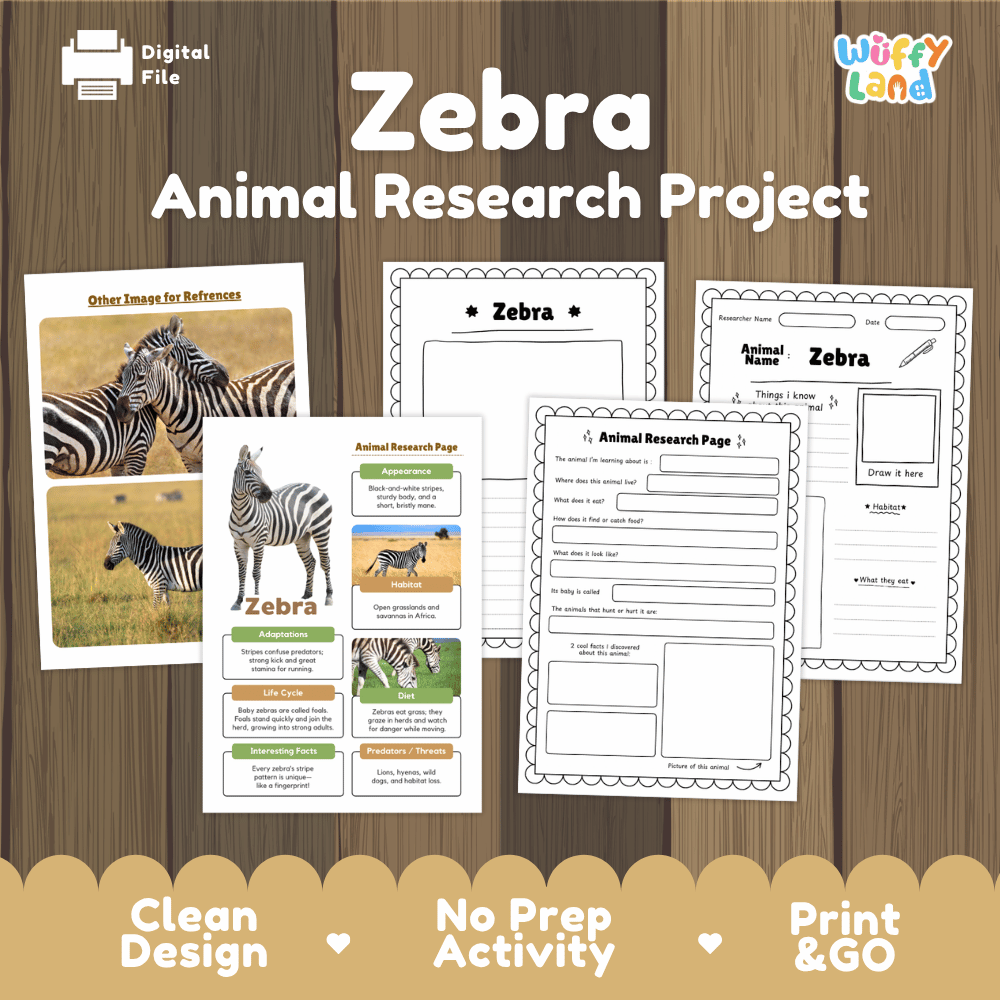
Zebra Animal Research & Informational Writing Worksheets →
Explore zebra habitats, diet, adaptations, and scientific facts with printable research and writing activities.

Zebra Life Cycle Poster & Cut-and-Paste Worksheets →
Explore zebra development from foal to adult with visual life cycle and sequencing activities.

Zebra Life Cycle Montessori 3-Part Cards →
Practice zebra life cycle vocabulary, matching, and sequencing with Montessori-inspired mammal flashcards.

Zebra Life Cycle 3-in-1 Bundle →
Combine zebra research, real-image learning resources, and Montessori life cycle cards in one bundle.
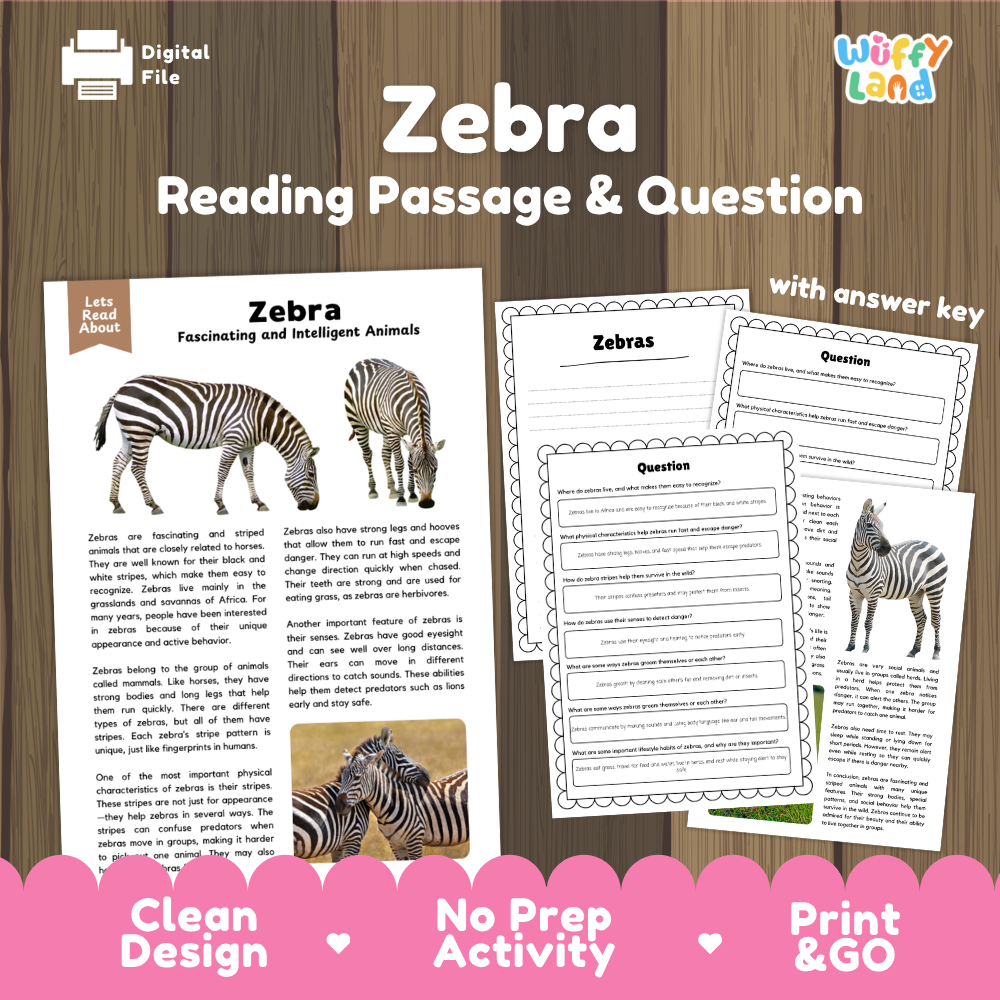
Zebra Reading Passage & Comprehension Worksheets →
Build nonfiction reading skills with an informational passage, comprehension questions, and answer key.

Zebra Cut-and-Paste Craft & Coloring Worksheets →
Combine savanna animal learning with creative coloring, cutting, and pasting activities.

Zebra Cut-and-Match Safari Animal Puzzle Worksheets →
Develop visual matching, fine-motor skills, and problem-solving abilities with printable zebra puzzles.

Parts of a Zebra Poster & Animal Anatomy Labeling Activity →
Identify zebra body parts with an anatomy poster and hands-on cut-and-paste labeling worksheets.