
Coral Facts for Kids | Polyps, Reefs & Life Cycle
It may look like a rock or an underwater plant, but coral is an animal! Explore coral facts for kids while connecting ocean science with research, reading, observation, and life cycle sequencing.
This guide focuses mainly on colonial, reef-building stony corals. Corals are diverse, so not every species has the same habitat, appearance, or relationship with algae.
🔎 Coral at a Glance
- Animal group: Marine invertebrates.
- Individual animal: A coral polyp.
- Common growth form: Many connected polyps forming a colony.
- Larval stage: Planula.
- Reproduction: Sexual reproduction and asexual growth, depending on species.
Begin with the Coral Animal Research Worksheets. Organize discoveries under headings such as appearance, habitat, feeding, and development.
🪸 Are Corals Animals or Plants?
Corals are animals. An individual coral animal is called a polyp. Many corals form colonies containing numerous connected polyps.
Classification activity: Compare photographs of coral, seaweed, and a rock. Discuss why appearance alone is insufficient for deciding whether something is an animal, plant-like organism, or nonliving material.
Thinking prompt: What evidence would help you investigate whether an unfamiliar object is alive?
🌊 Where Do Corals Live?
Corals inhabit marine environments, including shallow reefs and deep water. Habitat requirements differ among species.
Habitat investigation: Choose one named coral species and research its depth range, location, and surroundings.
Map activity: Mark a documented location and record your information source.
Avoid assuming that every coral requires the warm, sunlit conditions associated with familiar tropical reefs.
☀️ How Do Coral and Algae Help Each Other?
Many shallow-water reef-building corals contain symbiotic algae in their tissues. The algae use sunlight to make food through photosynthesis and share nutrients with their coral hosts.
Vocabulary connection: Symbiosis describes a close relationship between different organisms.
Drawing activity: Draw a coral polyp and add a magnified view representing algae inside its tissues. Label the relationship.
🦐 How Do Coral Polyps Get Food?
Coral polyps can capture small food organisms with their tentacles. In corals with photosynthetic partners, the algae provide an additional source of nourishment.
Compare feeding strategies: Investigate a coral polyp and a filter-feeding animal. Describe how each obtains food.
Connect the topic with the Coral Reading Passage and Comprehension Worksheets for informational reading practice.
🥚 Coral Life Cycle for Kids
Many stony corals reproduce by releasing eggs and sperm into the water. After fertilization, a developing embryo becomes a larva called a planula.
For a simplified broadcast-spawning coral example, use this sequence:
- Fertilized egg: An embryo begins developing.
- Planula larva: The young coral moves through the water.
- Settled polyp: The larva attaches to a suitable surface and transforms into a polyp.
- Growing colony: New polyps form through asexual reproduction such as budding.
- Mature colony: Reproductive polyps can produce eggs or sperm, beginning another cycle.
This sequence represents a common colonial stony-coral pattern. Some corals brood developing young and release larvae, while others live as solitary polyps.
Practice sequencing with the Coral Life Cycle Poster and Cut-and-Paste Worksheets.
Revisit vocabulary with the Coral Life Cycle Flashcards and Montessori 3-Part Cards. Retell the sequence using first, next, then, and finally.
🌱 How Does a Coral Colony Grow?
In many colonial corals, new polyps form from existing polyps through budding or division. This asexual reproduction expands the colony.
Modeling activity: Draw one polyp, then add connected copies to represent colony growth. Explain that the drawing simplifies a living structure.
Discussion question: How is producing new polyps within a colony different from larvae settling in a new place?
⚪ What Is Coral Bleaching?
Stress can cause corals to lose their symbiotic algae and become pale or white. This is called bleaching.
A bleached coral is not necessarily dead. It is stressed and may recover if conditions improve, but prolonged stress can lead to death.
Thinking activity: Explain why “bleached” and “dead” should not be used as interchangeable terms.
🎨 Observe, Create, and Explain
Compare a colony photograph with a close-up of its polyps. Identify details visible at each scale.
Pair the Coral Cut-and-Paste Craft and Coloring Activity with an original fact caption.
Caption starter: “Coral is an animal because…”
💬 Coral Vocabulary to Explore
- Invertebrate: An animal without a backbone.
- Polyp: The individual animal body form found in corals.
- Colony: A group of connected individuals living together.
- Planula: A coral larva.
- Settlement: Attachment of a larva to a suitable surface.
- Budding: A form of asexual reproduction in which a new individual grows from an existing one.
- Bleaching: Loss of symbiotic algae or their pigments, causing coral to become pale.
Vocabulary challenge: Use three words to explain part of a coral’s life cycle.
📚 Coral Learning Activities
Build a lesson around the question: How can tiny animals form a growing coral colony? Invite children to explain ideas through research, reading, sequencing, matching, and art.
- Research: Gather facts about one coral species and write a short report.
- Observe: Compare colony and polyp photographs.
- Sequence: Arrange stages from fertilized egg to a mature colony.
- Read: Connect marine science with informational reading and comprehension.
- Create: Add a factual caption to a craft or coloring activity.
- Match: Use the Coral Cut-and-Match Worksheets for visual observation practice.
- Extend: Explore the Coral Life Cycle 3-in-1 Bundle when planning a broader study.
Exit question: Explain the difference between a coral polyp and a coral colony.
🌸 Explore Our Coral Learning Resources
Explore these seven printable resources for animal research, life cycle lessons, reading, crafts, and matching activities.
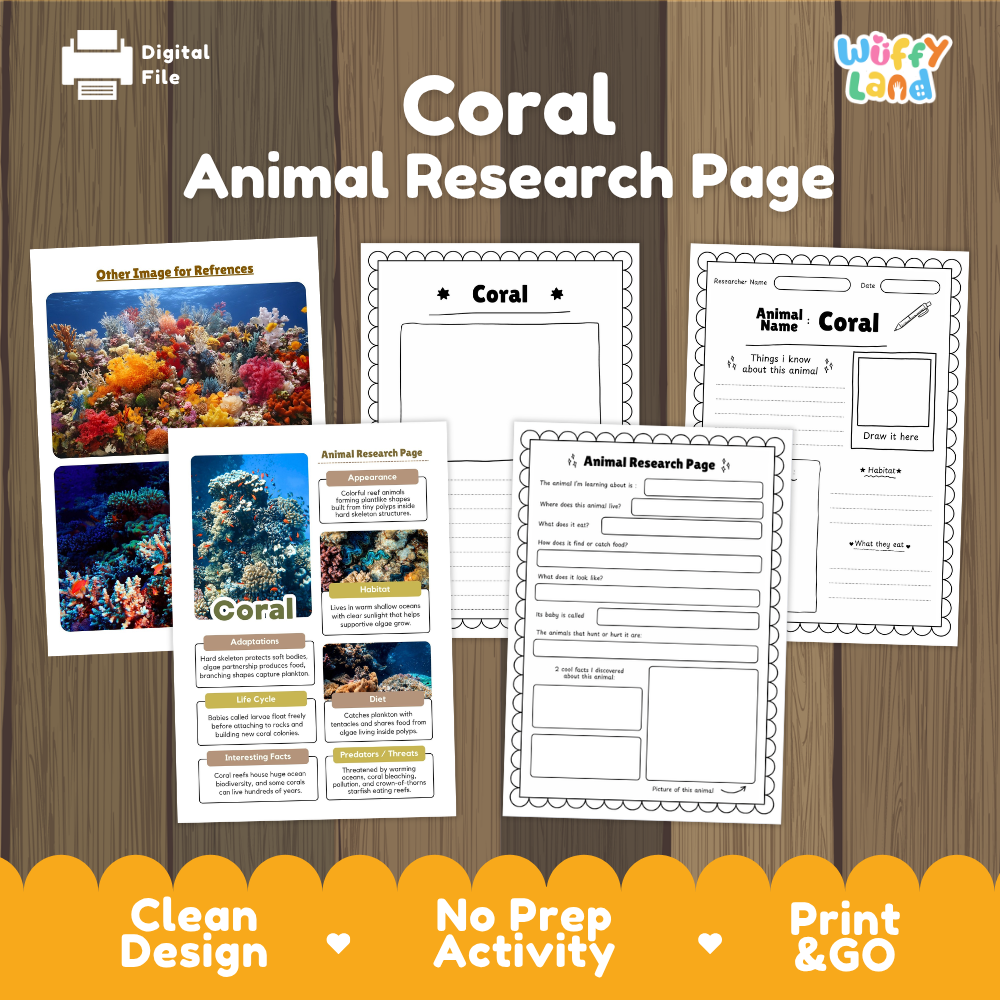
Coral Animal Research Worksheets →
Organize discoveries and support informational writing about corals.
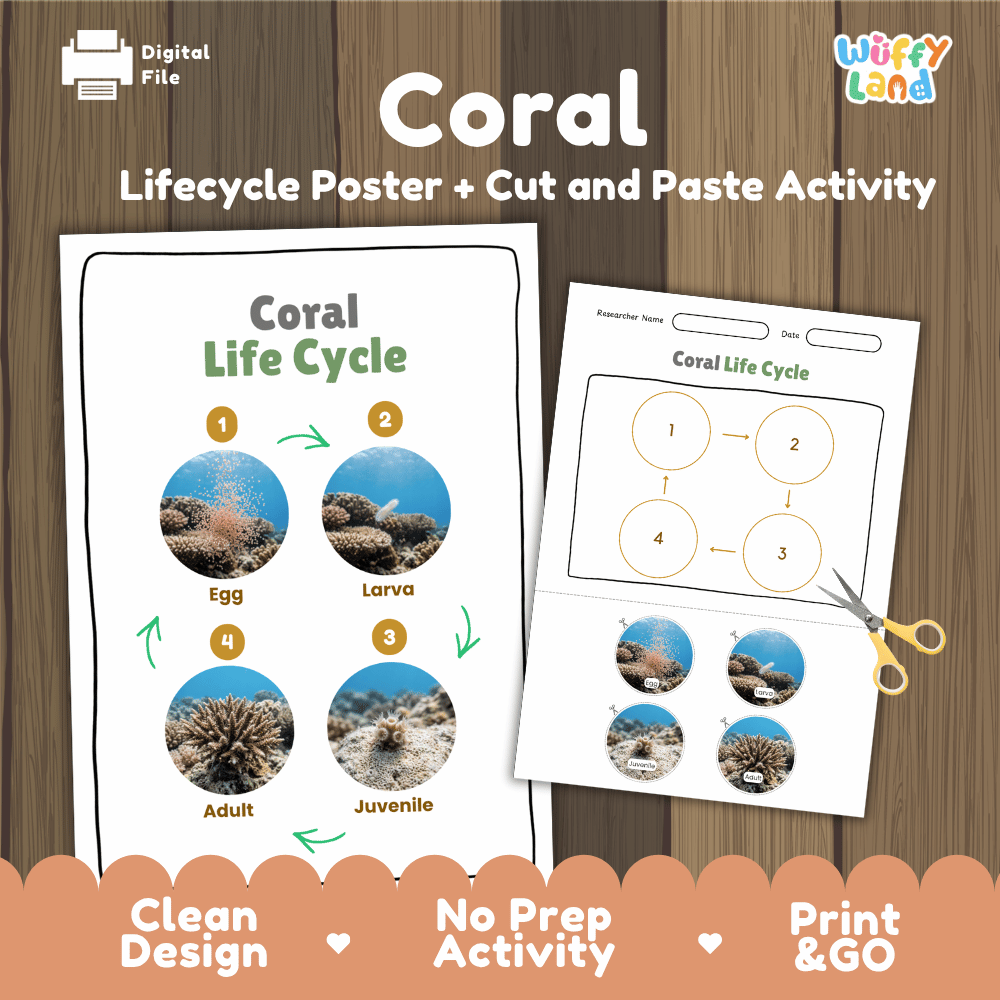
Coral Life Cycle Poster & Cut-and-Paste Worksheets →
Introduce life cycle vocabulary and practice sequencing development.
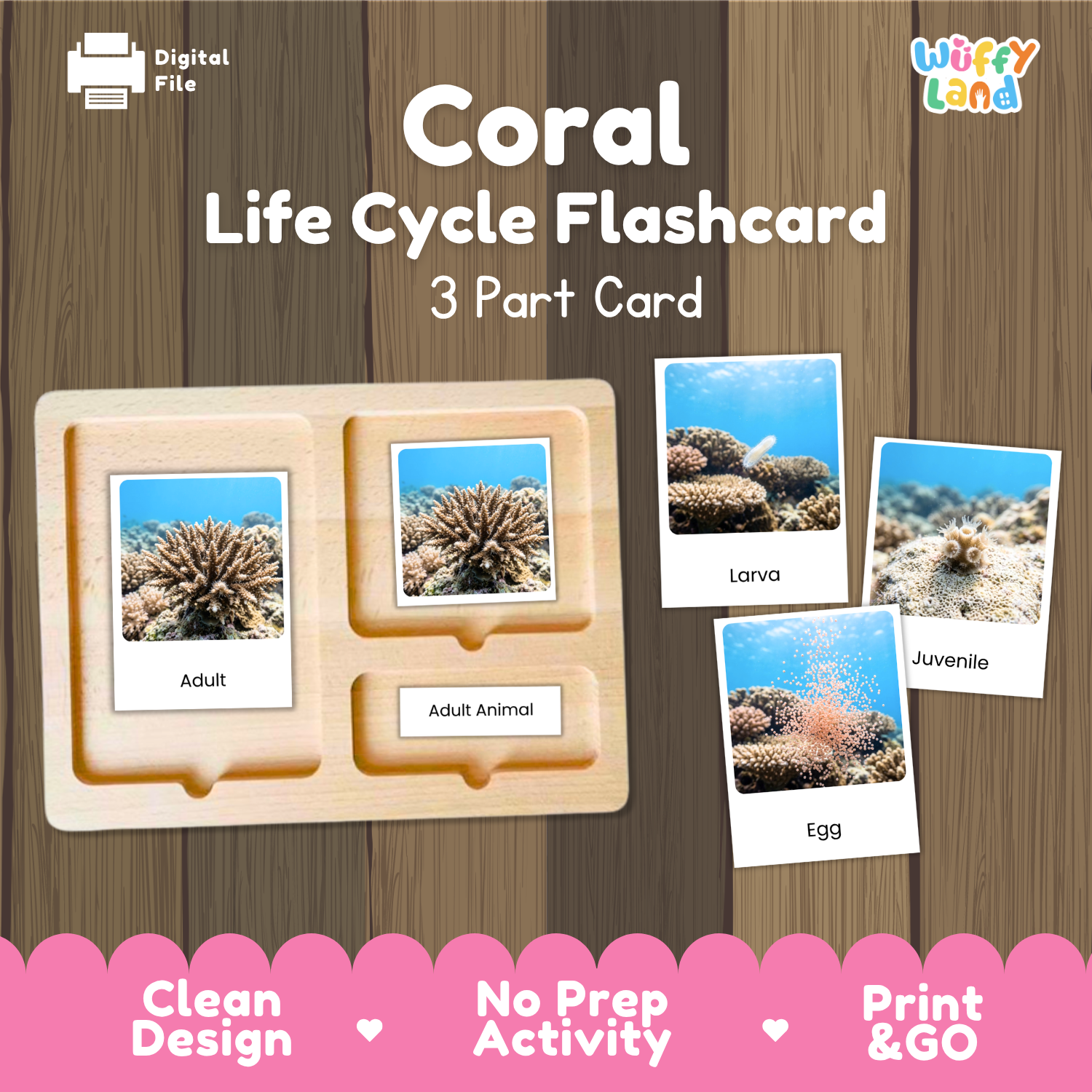
Coral Life Cycle Flashcards & Montessori 3-Part Cards →
Revisit life cycle terms through naming, matching, and discussion.
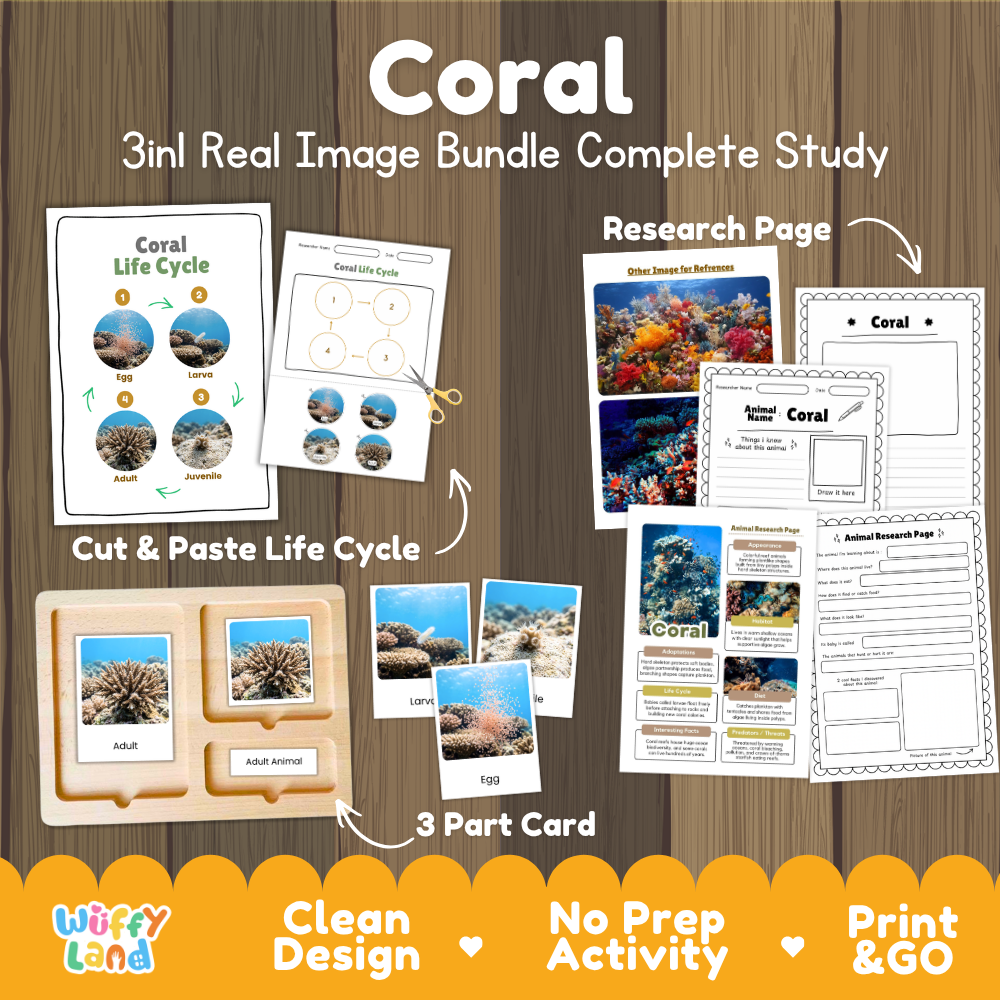
Coral Life Cycle 3-in-1 Bundle →
Explore a bundle option when planning connected coral lessons.
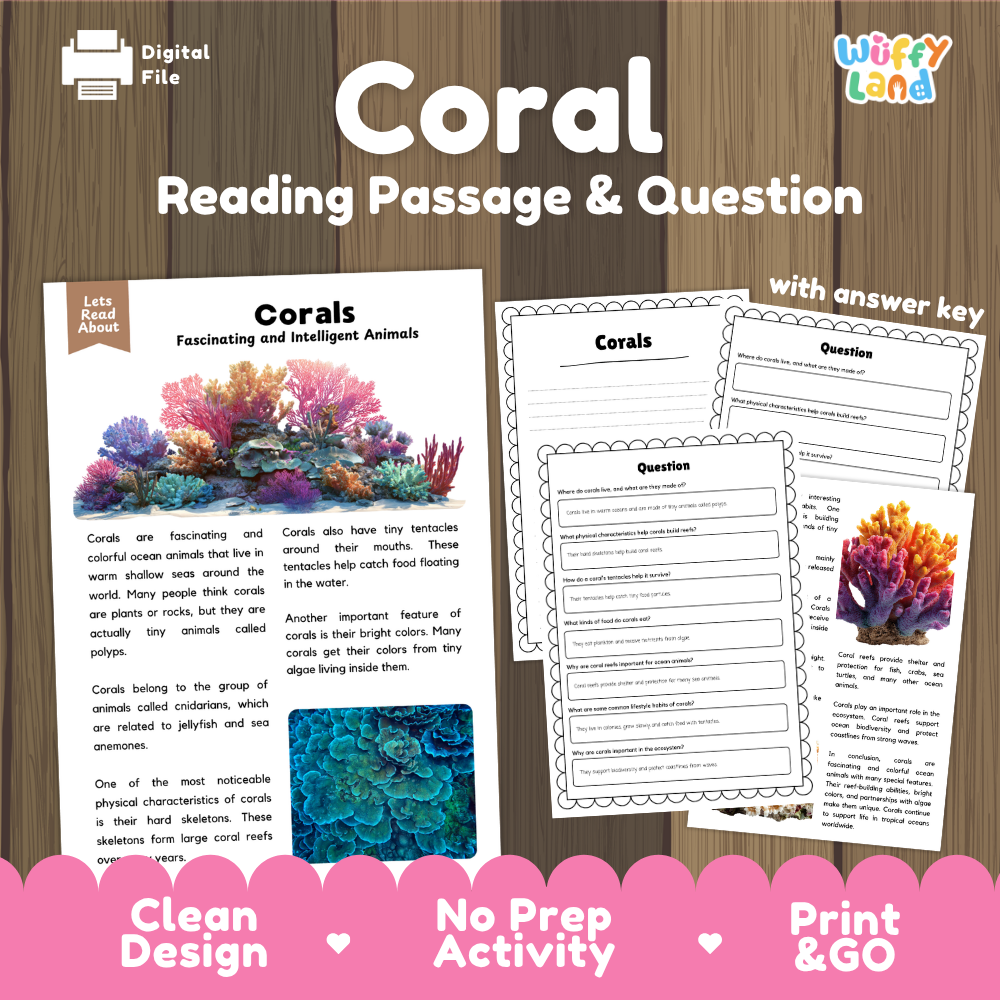
Coral Reading Passage & Comprehension Worksheets →
Connect ocean science with informational reading and comprehension practice.
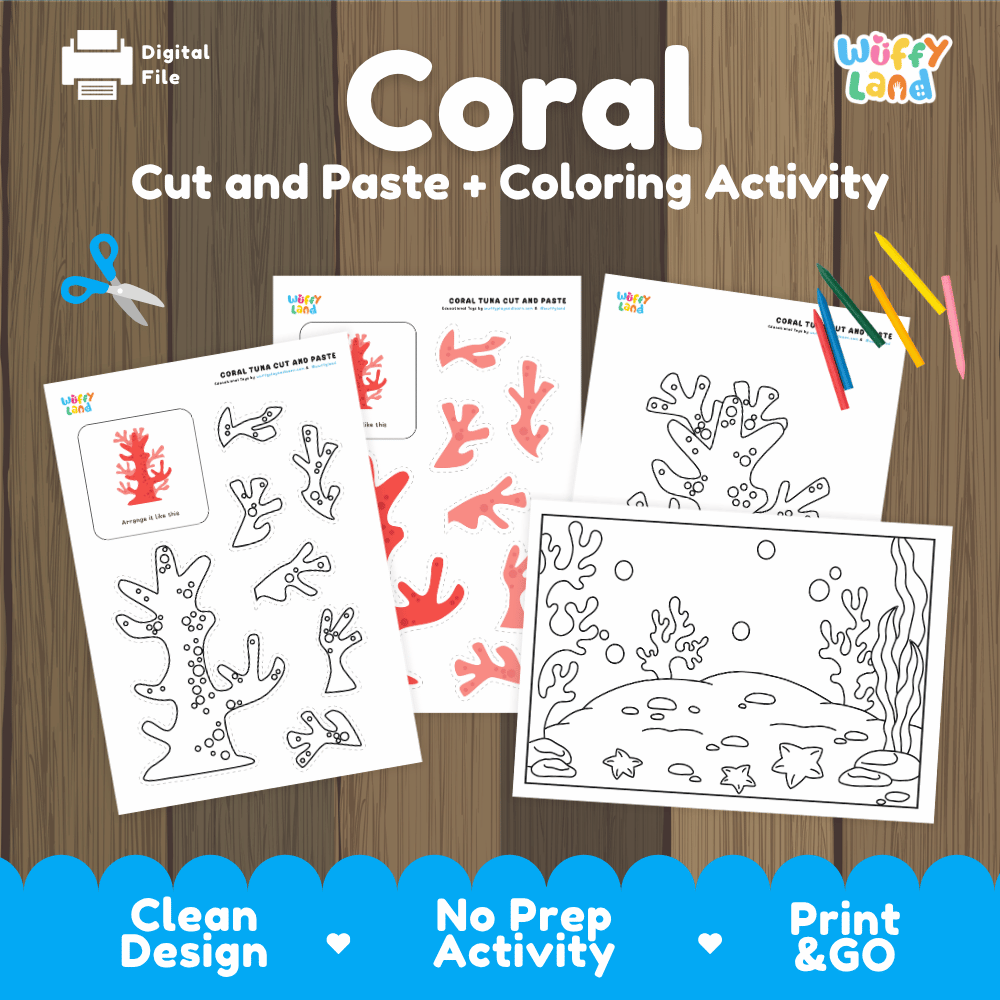
Coral Cut-and-Paste Craft & Coloring Activity →
Add cutting, pasting, and coloring to a coral learning session.
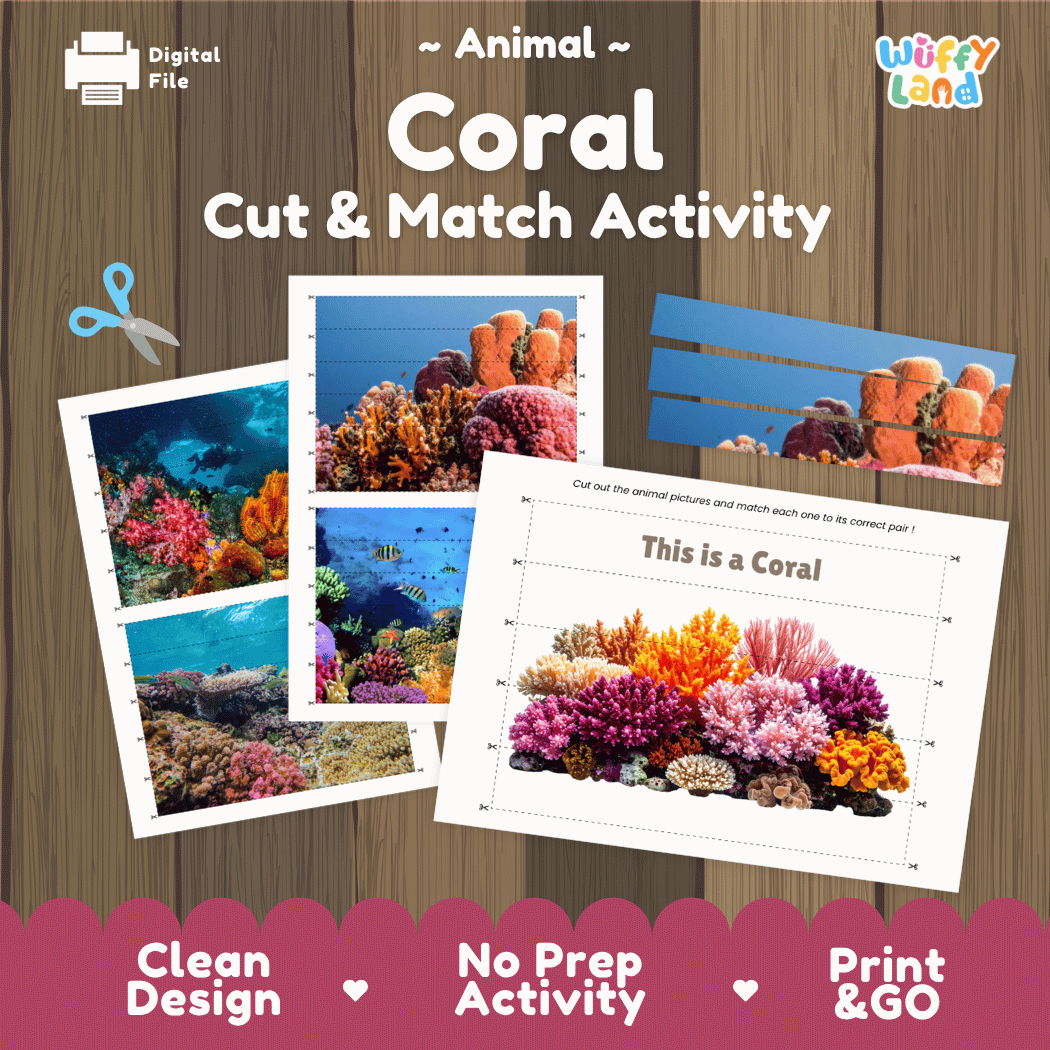
Coral Cut-and-Match Activity Worksheets →
Encourage careful observation with an ocean animal matching activity.